How to Start Using AI Without Getting Overwhelmed
(Especially if you feel like you're already behind).

This post was originally published on April 30, 2024 in another Substack publication of mine, TechThought. I've added a screenshot of the comments at the bottom of this post, for archival purposes :)If you’ve ever tried to dip your toe into the world of AI tools, you’ve probably felt it—the flood of jargon, the pressure to “10x your output,” the endless stream of newsletters and videos promising to unlock your productivity superpowers.
It’s exhausting.
But here’s the truth: You don’t need to “learn AI” in order to benefit from it. You don’t need to master prompting, explore dozens of tools, or build a workflow with 17 moving parts.
You just need to start with one thing that matters to you.
Let’s break that down.
1) Start with your own life, not with the tool
Don’t ask, “What can AI do?”
Ask, “Where am I stuck?”
That’s your entry point.
If you're trying to draft an email, summarize a meeting, brainstorm a name, or clarify an idea—those are perfect reasons to open ChatGPT or another AI tool. Not because you’re trying to “learn AI,” but because you’re doing something you already do… and wondering if it could be easier.
Real use leads to real learning. Start where you are.
2) Choose one tool and ignore the rest (for now)
There are hundreds of AI tools out there. Ignore 99% of them.
Pick one and get comfortable with it. If you’re writing or thinking things through, start with ChatGPT. If you deal with long documents or need help with research, Claude is a great option. If you’re visual, try DALL·E or Midjourney just for fun.
Once you build confidence with one, adding a second is easier. But resist the temptation to build a “stack” before you’ve even used a single tool consistently.
3) Talk like a person (no magic words needed)
You don’t need to learn prompt engineering. You don’t need special syntax. You don’t need to pretend you’re a product manager at Google.
Just talk to the AI like you would to a helpful coworker.
Say things like:
“Help me write a friendly follow-up message.”
“Summarize this article in a few sentences.”
“Give me five names for a YouTube channel about ADHD and creativity.”
If the output is off, clarify. If it’s close, refine. You’re in conversation, not command mode.
4) Don’t expect magic—look for momentum
Sometimes AI will surprise you with a brilliant response. Other times it’ll give you bland nonsense or confidently wrong information. That’s fine. That’s expected.
Think of AI as a brainstorming buddy or first-draft generator. Its job isn’t to be perfect—it’s to help you move forward faster. A rough idea you can shape beats a blank page you stare at.
The goal is traction, not genius.
5) You don’t need to “understand” AI to use it
You don’t have to know how a microwave works to reheat your coffee. You don’t need to understand the theory behind large language models to use AI tools meaningfully.
This technology is meant to be used by regular people. If you’re curious and willing to experiment, you already qualify.
Don’t let the tech talk scare you off. Most of it isn’t relevant to your actual use case.
6) Tune out the hype and go at your own pace
The AI space is full of noise—people selling prompt packs, automation blueprints, and endless strategies to “scale your output.”
But you don’t need to do any of that unless you want to.
You’re not too late. You’re not behind. You’re not failing because you’re not using GPT-4 to write a novel while it updates your CRM.
Go slow. Get curious. Focus on tools that make your day better, not more complicated.
7) Small wins are still wins
If an AI tool helped you finish a draft you would’ve abandoned? That’s a win.
If it saved you ten minutes on something tedious? Win.
If it helped you organize your thoughts or made you feel slightly less overwhelmed by the blank page? Huge win.
AI doesn’t have to change your life. It just has to help, a little.
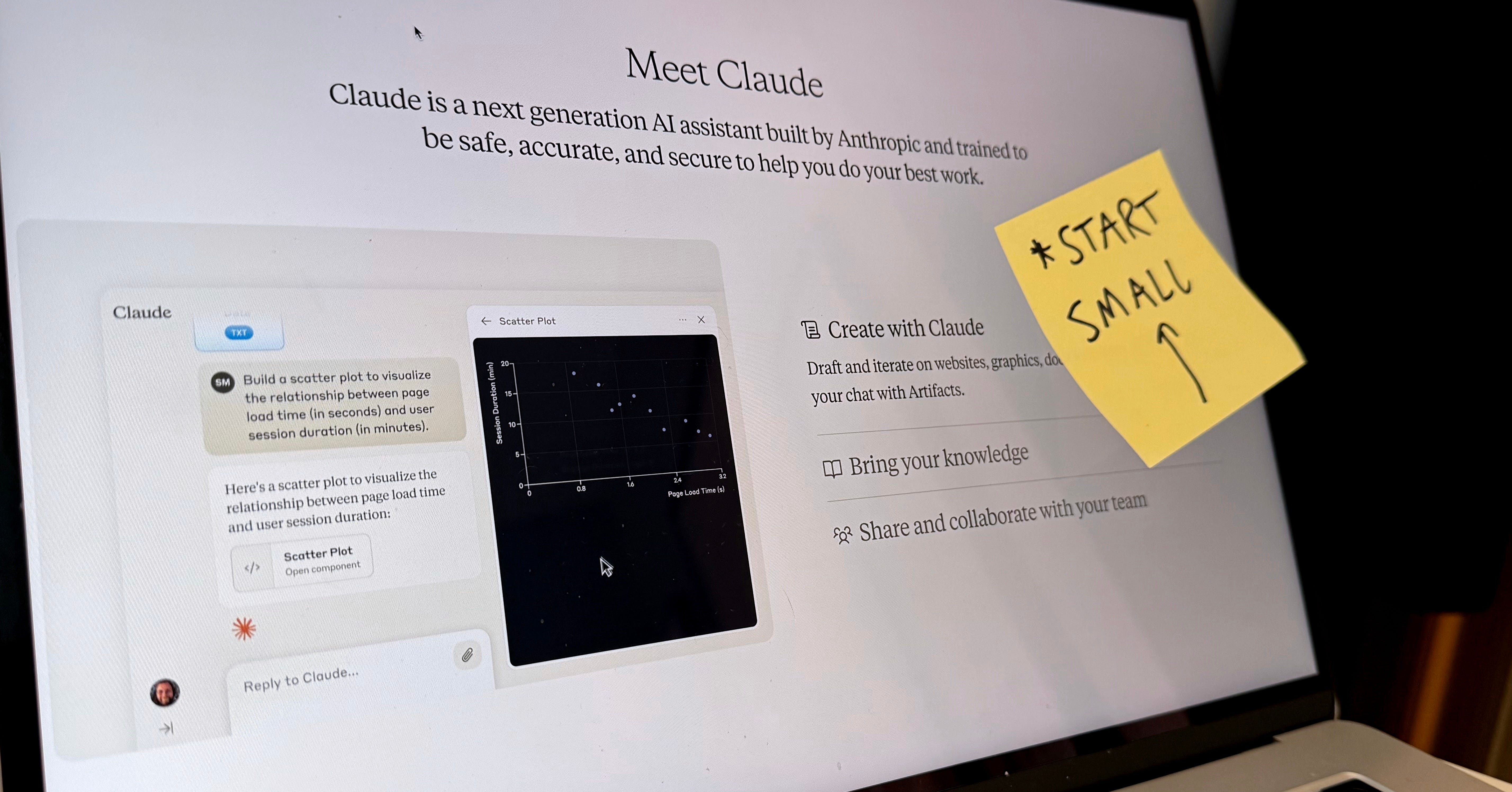
So if you’ve been on the sidelines—watching the hype, feeling unsure where to start—this is your permission slip: Start small. Start personal. Start real.
The best way to learn AI… is to use it. For something you actually care about.

Want help thinking through your first real use case? Drop it in the comments and I’ll help you work through it.
You don’t have to do this alone—or all at once.